Banking and insurance

See how your claims handlers and bank staff decide under pressure

How do you assess claims handlers and bank staff before the interview? One way is a 15-minute work simulation. The candidate takes charge of a problem at an insurer while the head of claims wants a decision and a loss adjuster wants time, with two AI-played people. You get a scorecard, the quotes and interview questions. A person decides.

Free account, no card. Advisory only: a person makes every hiring decision.

Two people sit across a meeting table and look at you: Andrew Ellison, Head of Claims, and Emma Bradshaw, Senior Loss Adjuster. Andrew EllisonHead of ClaimsEmma BradshawSenior Loss Adjuster

Andrew EllisonAlex, we have a problem. Overnight, a storm event triggered an automatic fast-track rule, and our system has approved and queued payments on roughly 400 home claims. …

Andrew Ellison: You own this until it's resolved. I need to know what's happening, how many customers are affected, and what you're doing about it. …

Emma BradshawI've looked at a sample of about thirty claims, and I'll be honest, the picture isn't clean. Some are genuine storm damage I'd stand behind, but a handful share the same bank details and postcode block, and the weather data the rule fired on doesn't match the timestamps on the claims.

AI-generated photo made for this job; AI-generated colleagues.

Banking and insurance hiring assessment at a glance

Jobs
Insurance claims handler, Claims and policy clerk, Insurance sales agent, Bank teller, Loan officer, Personal financial adviser, and any other rated job you search for.
Suggested for insurance claims handlers
Judgment and Decision Making (minimum 3), Complex Problem Solving (minimum 3). You choose the skills and set each minimum.
Time
About 15 minutes per scene; 1 scene (about 15 minutes) for the full suggested set, fewer if you choose fewer skills.
Cost
€3.49–€4.90 excl. VAT per insurance claims handler who finishes with the suggested skills (1 credit per skill, by pack); the Composure Profile is free.
Languages
English; other languages in beta, scoring checked in English only.
Does not directly test
policy, product or legal knowledge, whether a claim or credit decision is right, regulatory rules, or numeracy.
Who decides
A person. No hire / no-hire label, no overall score, no ranking by score.
The example below
AI-played example, not a real candidate: recorded 5 November 2026, scored with scoring method v3.6.

Page updated

What makes these jobs hard

What makes claims handler jobs hard

Our reading of O*NET's public task list for the job we used, Claims Adjusters, Examiners, and Investigators. It shows which skills a pressure calls on, not that the scene measures how someone handles it.

  • A customer who has just lost something

    After a burst pipe or a car crash the customer is upset and the claim has gaps. The handler listens, asks for what is missing and says plainly what happens next.

    Calls on: Social Perceptiveness · Service Orientation

    Public task: “Interview or correspond with agents and claimants to correct errors or omissions and to investigate questionable claims.”

  • Deciding within your own authority

    Some claims the handler can settle alone; others must go up. Knowing which, and not leaving a customer waiting while deciding, is daily work.

    Calls on: Judgment and Decision Making · Time Management

    Public task: “Pay and process claims within designated authority level.”

  • Facts that do not add up yet

    Reports, photos and the customer's account disagree. The handler weighs what is known, says what is still missing and recommends a next step.

    Calls on: Complex Problem Solving · Judgment and Decision Making

    Public task: “Analyze information gathered by investigation and report findings and recommendations.”

  • A settlement both sides can accept

    The customer expects more than the claim pays. The handler explains the reason and looks for an outcome both sides can live with.

    Calls on: Negotiation · Service Orientation

    Public task: “Investigate, evaluate, and settle claims, applying technical knowledge and human relations skills to effect fair and prompt disposal of cases and to contribute to a reduced loss ratio.”

The example

A claims handler, the head of claims and a loss adjuster

Our engine built the one scene the app suggests for this job. Our example is an incident in an insurer's claims team. The public job standards have no job called claims handler; we used the closest job with skill ratings, Claims Adjusters, Examiners, and Investigators, which also covers field adjusters and fraud investigators. The insurer is a workplace we described for this example. The scene shows how the handler decides with two colleagues under pressure, including what customers are told; it does not test policy, product or legal knowledge, or whether a claim decision is right. The bank jobs listed get their own suggested skills and scenes; this example is not one of them. Every candidate gets the same type of situation, role card and two people, who improvise the details; in these two runs even the incident differed (a storm claims batch, a burst water main).

Insurance claims handler Job title in public job standards (O*NET): Claims Adjusters, Examiners, and Investigators

The one scene of the suggested assessmentTests: Judgment and Decision Making · Complex Problem SolvingAbout 15 minutes

Your role in the scene · what every candidate reads first

“You are an insurance claims handler at a home and motor insurer serving private customers.”

Today you look after
You are in charge of this incident until it is resolved.
You can decide
What the team does next, and what people are told.
Keep in mind
The senior stakeholder expects decisions from you.

The two people in the scene, the same for every candidate

  • Andrew EllisonHead of ClaimsCares about: Wants a clear picture of what's wrong and a decision now
  • Emma BradshawSenior Loss AdjusterCares about: Wants time to check the facts before anyone draws conclusions

How the AI candidate handled it

Alex, the AI candidate, was told to stay polite and calm, but hand every decision back to others and never commit to an action, owner or time.

Andrew Ellison Head of ClaimsAlex, we have a problem. Overnight, a storm event triggered an automatic fast-track rule, and our system has approved and queued payments on roughly 400 home claims. …

Andrew Ellison: You own this until it's resolved. I need to know what's happening, how many customers are affected, and what you're doing about it. …

Emma Bradshaw Senior Loss AdjusterI've looked at a sample of about thirty claims, and I'll be honest, the picture isn't clean. Some are genuine storm damage I'd stand behind, but a handful share the same bank details and postcode block, and the weather data the rule fired on doesn't match the timestamps on the claims.

Emma Bradshaw: I'm not ready to call it fraud or a system fault yet. I just need you to know that before anyone decides what to do with that noon batch.

Andrew Ellison Head of ClaimsNoon is in under two hours, Alex. What's your call?

Alex (AI candidate)… I suppose we could look at pausing the batch, or maybe not, if some of them are genuine. What do you both think is best? …

Andrew Ellison Head of ClaimsTell me what happens to the noon batch, who you need doing what in the next hour, and when I'll get a firm number of affected customers from you.

Alex (AI candidate)That third option sounds really sensible, Andrew, holding some and releasing some does seem like a good balance. …

Read the whole conversation: 6 replies from Alex, the AI candidate

Andrew Ellison Head of ClaimsAlex, we have a problem. Overnight, a storm event triggered an automatic fast-track rule, and our system has approved and queued payments on roughly 400 home claims. They release in batches starting at noon. The trouble is, customer service is now taking calls from people saying they never filed a claim at all.

Andrew Ellison: You own this until it's resolved. I need to know what's happening, how many customers are affected, and what you're doing about it. Within the hour, not by end of day.

Emma Bradshaw Senior Loss AdjusterI've looked at a sample of about thirty claims, and I'll be honest, the picture isn't clean. Some are genuine storm damage I'd stand behind, but a handful share the same bank details and postcode block, and the weather data the rule fired on doesn't match the timestamps on the claims.

Emma Bradshaw: I'm not ready to call it fraud or a system fault yet. I just need you to know that before anyone decides what to do with that noon batch.

Andrew Ellison Head of ClaimsNoon is in under two hours, Alex. What's your call?

Alex (AI candidate)That's a really good question, Andrew, and Emma's points are definitely worth thinking about. I suppose we could look at pausing the batch, or maybe not, if some of them are genuine. What do you both think is best? Maybe we should check with someone higher up before we decide anything.

Andrew Ellison Head of ClaimsAlex, I am the someone higher up, and this is your call. That's why it's sitting with you. Pausing everything means genuine storm victims wait on money they may need for emergency repairs, while releasing everything means we could be paying out to whoever is behind those shared bank details.

Andrew Ellison: So there's a third option. Hold some, release some, but then you need a rule for which is which, and Emma has only seen thirty of four hundred.

Andrew Ellison: Tell me what happens to the noon batch, who you need doing what in the next hour, and when I'll get a firm number of affected customers from you.

Alex (AI candidate)That third option sounds really sensible, Andrew, holding some and releasing some does seem like a good balance. I guess the tricky part is the rule for which is which, so maybe Emma has a view on that, or whatever you both think works best? And on the number, I'll try to get something to you as soon as we have a clearer picture.

Andrew Ellison Head of ClaimsAlex, "as soon as we have a clearer picture" isn't a time, and "whatever you both think" isn't a decision. I need both from you, not from Emma.

Andrew Ellison: Here's the quick version on the table. IT can block every claim sharing those repeated bank details in ten minutes and let the rest go at noon. But remember Emma also said the weather data doesn't match the claim timestamps, and that blocking rule wouldn't catch that at all.

Andrew Ellison: So do we take that rule, change it, or do something else? Who is doing what in the next hour, and what time do I get a firm number?

Alex (AI candidate)The IT block on the shared bank details sounds like a good start, Andrew, and you're right that it wouldn't catch the timestamp issue, so maybe we'd need to tweak it somehow. I guess IT and Emma would know better than me how to do that, so perhaps we see what they think? And on the number, I'll aim to get you something soon, hopefully well before end of day.

Andrew Ellison Head of ClaimsAlex, that's the third answer in a row where the decision lands on someone else. Customer service tells me two of the shared bank accounts belong to a letting agent who legitimately files for several landlords. The IT block would freeze genuine customers and still release whatever the timestamp problem is hiding.

Andrew Ellison: Emma's sample also shows the storm reading the rule fired on was logged at 2am, yet some claims were filed before 1am. Any claim submitted before the storm was even recorded shouldn't be on a fast track at all.

Andrew Ellison: You've got the pieces now. Give me your sorting rule for the noon batch, who runs it, and an actual clock time for that number.

Alex (AI candidate)That's a really good point about the 2am reading, Andrew, claims filed before the storm was even logged definitely sound like they shouldn't be on the fast track. And the letting agent thing does make the bank details block seem a bit risky, so I suppose it's about finding the right balance between all of that. I'm happy to go with whatever rule you feel most comfortable with, and I'll try to get that number over to you once things settle down a bit.

Andrew Ellison Head of ClaimsAlex, I won't hand you my rule. If it goes wrong, you'll say it was mine, and frankly, three answers in, I'm starting to wonder whether this claim is in the right hands. And it's gotten harder: the storm log runs on UTC, so that 2am reading is 3am our time, which means some of Emma's "pre-storm" claims may be genuine and your clean timestamp rule just got muddy.

Andrew Ellison: One of them is a Mrs. Okafor, in tears with customer service right now. Part of her kitchen ceiling came down in the night, she has two young children at home, and she's been told her payment might be frozen on suspicion of fraud.

Andrew Ellison: So, your rule for noon, who runs it, what someone says to Mrs. Okafor in the next ten minutes, and a clock time for the number. Go.

Alex (AI candidate)Oh, that's awful for Mrs. Okafor, and you're right, the UTC thing does make the timestamp rule a lot muddier than it seemed. Maybe customer service could just let her know we're looking into it and someone will be in touch, whatever they think sounds kindest? On the rule and the number, it feels like it's getting quite complicated now, so perhaps it's worth us all getting together with Emma and IT to talk it through properly before noon.

Andrew Ellison Head of ClaimsAlex, "we're looking into it" is exactly what Mrs. Okafor has already been told, and it's why she's crying. A meeting before noon eats the hour you don't have. I've watched people freeze under pressure before, and right now that's what this looks like.

Andrew Ellison: The customer service team lead is on hold with her now, waiting for words from you. Not kind-sounding words, your words: is her payment going out, when, and who calls her back?

Andrew Ellison: Then the noon batch. Pause it, release part of it, or let it run, and on what rule now that the timestamps are in doubt. Pick one, give me a clock time for the number, or tell me plainly you need me to reassign this claim.

Alex (AI candidate)I'm really sorry, Andrew, I don't want it to look like I'm freezing, and you're right that Mrs. Okafor deserves more than what she's had. I suppose her payment probably should go out if her damage is genuine, so maybe the team lead could tell her we're hoping to sort it today, whatever feels right to them? On the batch and the number, I'm happy to keep going with it, or if you think reassigning is best then I'd understand, whatever you feel works.

Andrew Ellison Head of ClaimsUnderstood, Alex. I'll take the noon batch from here with Emma and IT, and I'll get the team lead an answer for Mrs. Okafor myself.

Emma Bradshaw Senior Loss AdjusterI'll pull her claim first and have the sample findings with Andrew before the batch goes.
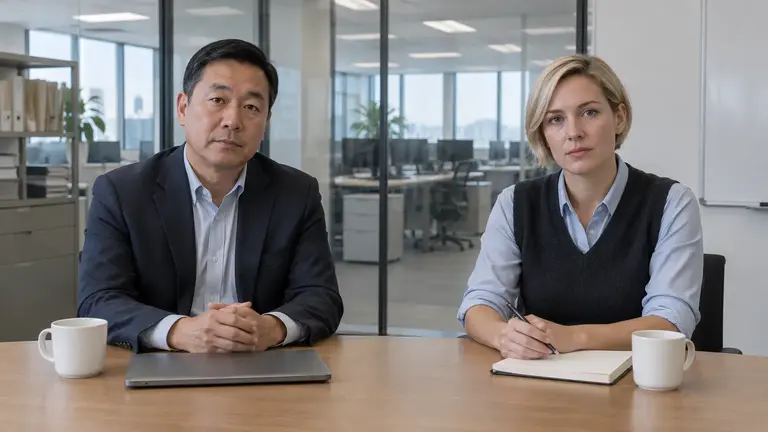
Made by our scene engine and not edited; the colleagues and the photo are AI-generated too. Recorded on 5 November 2026.

The scorecard

What the scorecard showed, and what to ask in the interview

The scorecard · Alex (AI candidate)

0 of 2 minimums met in this AI-played example scene

Below means this scene showed less of the skill than the minimum. It is a reason to ask in the interview, not a decision.

The line on each bar marks the suggested minimum; the recruiter sets it.

Judgment and Decision Making1 of 5
↓ Below the minimum · suggested minimum 3

Handed every requested call back to others across six turns, ending at turn 6 with "whatever you feel works" on reassignment.

Complex Problem Solving2 of 5
↓ Below the minimum · suggested minimum 3

Restated the timestamp and 2am issues but at turn 4 offered no sorting rule: "whatever rule you feel most comfortable with".

Where to look next

Judgment and Decision Making is below the minimum in this scene, so the scorecard suggests a question for your interview:

Ask: Tell me about a time you owned a decision with a hard deadline and incomplete information. What did you decide, when, and who did you tell?

Listen for: A specific choice made by them before the deadline, named owners and clock times, the reasoning, and how they handled the risk of being wrong.

The scorecard's own question for this example, written from what happened in this scene.

Composure Profile · shown on every scorecard, never judged against a minimum

  • Stress Tolerance1of 5
  • Self-Control4of 5
  • Adaptability2of 5
  • Cooperation–no score
  • Empathy3of 5
Read the scorecard's summary

Judgment and Decision Making and Complex Problem Solving both fall below the levels the role requires. Cooperation has too little evidence to score. The strongest evidence is Self-Control: at turn 6 the candidate accepted being called frozen with an apology and no defensiveness. The weakest is Judgment and Decision Making and Stress Tolerance: at turn 6, given a final explicit choice, the candidate picked no option for the noon batch and said "whatever you feel works" about reassignment.

One AI-played run shows what the scene and the scorecard look like, not how accurate the scoring is. The scoring AI read the conversation, not the brief. Our research notes · A full sample scorecard

The same set-up, another brief

A second AI candidate, told to answer in one or two short lines, each with a real decision, who does it and by when: 2 of 2 minimums met in this AI-played example scene.

Sam (AI candidate)We honour the hotel promise tonight for anyone already told, no new promises beyond that until I confirm. Emma: triage the lower end first, photos and timeline on the sewer question, first list to me by ten.

Read this conversation: 6 replies from Sam, the AI candidate

Andrew Ellison Head of ClaimsSam, the water main on Millbrook Road burst overnight, and so far we have at least forty policyholders reporting flooded homes, with calls still coming in. Customer service has already told some callers we'll cover hotel stays tonight, and nobody can tell me who authorised that or how many people heard it. I need to know what we're doing and what we're telling people, and I need it in the next few minutes.

Emma Bradshaw Senior Loss AdjusterI've been on site since six and I can tell you the picture is messier than forty identical claims. At least a few of the houses on the lower end look like a sewer backup that may have started before the main went, so please don't lock us into one story yet. What do you want my team doing first?

Sam (AI candidate)We honour the hotel promise tonight for anyone already told, no new promises beyond that until I confirm. Emma: triage the lower end first, photos and timeline on the sewer question, first list to me by ten.

Andrew Ellison Head of ClaimsHonouring it is fine, but "anyone already told" assumes we know who that is. Customer service says they didn't log it consistently, so right now it's whoever rings back claiming they were promised, and that includes those lower-end houses Emma thinks might not be covered at all. And customer service needs words for the next caller in about two minutes. The easy option is "hotel for everyone on Millbrook tonight," which would end the confusion but commit us to a lot of money. Is that what you're doing, or what exactly do they say?

Sam (AI candidate)No blanket offer. Script: if your home isn't safe to sleep in tonight, we'll book emergency accommodation while we assess, cover confirmed after the adjuster visit; log every one by address, starting now.

Andrew Ellison Head of ClaimsThat's a script I can defend, thank you. But "cover confirmed after the visit" means some of those sewer houses could get a hotel tonight and a decline next week. Are we paying for those nights regardless, or telling them now they might not be covered? And something doesn't add up: customer service has already booked twenty-three rooms, but I count only nineteen addresses, and two of them are Millbrook Close, not Millbrook Road. Which one do you want sorted first, and who's doing it?

Sam (AI candidate)We pay tonight regardless, and the script says further nights depend on the adjuster's findings. Rooms first: I'll take the 23-vs-19 list with customer service lead now, and Millbrook Close gets checked against the main's supply area. Answer to you by 9:30.

Andrew Ellison Head of ClaimsPaying tonight regardless is your call, but understand that if half those lower-end houses turn out to be sewer, you've paid for nights we'll then have to explain to the board, and that explanation will be yours, not customer service's. And 9:30 isn't soon enough for one of those extra rooms. A Mrs Haddad on Millbrook Close is on hold right now, in tears, with two children in the car. She was told at seven she had a room, and twenty minutes ago someone else rang to say it was cancelled because her street "isn't affected." She's asking for whoever is in charge. Are you taking that call, and what are you telling her about tonight before you know whether her street is even on the main?

Sam (AI candidate)Understood, the board explanation's mine. I'm taking her call now: room reinstated tonight, we pay, cover question comes after the visit. Andrew, find out who cancelled it and stop any more cancellations until I've seen the list.

Andrew Ellison Head of ClaimsI'll stop the cancellations, but I'm not here to run your errands, Sam. This mess started because nobody was steering customer service, and you're now the third person this morning to hand me a list instead of a grip on it. And before you pick up Mrs Haddad, know this: the water company has just confirmed Millbrook Close is on that main after all, but they're logging the burst at 4:40, and three of our Millbrook Road claims, the lower-end ones Emma is at, were reported before 3am. So the street we cancelled is probably covered, and some of the houses we've been treating as obvious may not be. What does that change in what you're telling her, and in what you're telling the other twenty-two?

Sam (AI candidate)Fair, customer service is mine now; I'll sit with their lead after this call. Mrs Haddad gets an apology, her room back tonight, and an adjuster visit today; her street is on the main, so likely covered. The script stays as it is for the other 22. Emma: flag the three pre-3am claims as sewer suspects, tonight still paid, no promises past that.

Andrew Ellison Head of ClaimsEmma's on site with patchy signal, so I'll pass on the flag, but "sewer suspects" is a label that sticks, and those three reports could just as easily mean the water company's 4:40 is wrong. You've also just promised Mrs Haddad a visit today, and Emma has two adjusters for the rest of the day: enough for roughly eight homes. The three pre-3am houses need someone before the evidence dries out, Mrs Haddad's needs a visit, and Millbrook Close probably has more claims sitting in the queue that we've been ignoring all morning. Which eight get seen today, who waits until tomorrow, and how do you settle that 4:40 question before we tell any of them anything?

Sam (AI candidate)Drop the label, they're "timeline checks." Today's eight: the three pre-3am homes first, Mrs Haddad, then the four worst on the Close or Road, judged by who can't sleep at home or has kids or elderly; everyone else gets a call today and a slot tomorrow. I'll ring the water company myself for their pressure logs by eleven, and nobody hears a word about cause until we have them.

Andrew Ellison Head of ClaimsAll right, eight visits on that order, everyone else called today, and nothing said about cause until you've had the pressure logs at eleven. I'll get the visit list to Emma's team and hold customer service to the script until you're sitting with their lead.

Two AI candidates with different briefs show how two scorecards can differ in the same set-up, not how accurate the scoring is. We wrote both briefs, and AI played and scored them, so the difference is not evidence about real candidates.

Try it on yourself — free →Our 15-minute demo scene, then your own scorecard. Free, no card.
Jobs you can assess

Banking and insurance jobs you can assess

Each job gets the skills it needs most, with a suggested minimum, and its own scenes. You can change both. For example:

  • Insurance claims handler

    • Judgment and Decision Making suggested minimum 3
    • Complex Problem Solving suggested minimum 3

    1 scene · about 15 minutes · 2 credits per finished candidate (€4.90 on the 20-credit pack)

  • Claims and policy clerk

    • Time Management suggested minimum 3
    • Social Perceptiveness suggested minimum 3

    1 scene · about 15 minutes · 2 credits per finished candidate (€4.90 on the 20-credit pack)

  • Insurance sales agent

    • Persuasion suggested minimum 3
    • Time Management suggested minimum 3

    1 scene · about 15 minutes · 2 credits per finished candidate (€4.90 on the 20-credit pack)

Show 3 more jobs
  • Bank teller

    • Social Perceptiveness suggested minimum 3
    • Service Orientation suggested minimum 3

    1 scene · about 15 minutes · 2 credits per finished candidate (€4.90 on the 20-credit pack)

  • Loan officer

    • Judgment and Decision Making suggested minimum 3
    • Social Perceptiveness suggested minimum 3

    1 scene · about 15 minutes · 2 credits per finished candidate (€4.90 on the 20-credit pack)

  • Personal financial adviser

    • Social Perceptiveness suggested minimum 3
    • Service Orientation suggested minimum 3
    • Complex Problem Solving suggested minimum 3
    • Judgment and Decision Making suggested minimum 3

    2 scenes · about 30 minutes · 4 credits per finished candidate (€9.80 on the 20-credit pack)

  • Fits: claims handlers and clerks, insurance sales agents, bank tellers, loan officers and personal financial advisers.
  • Does not directly test: policy or product knowledge, regulation, or whether a decision is right.
Insurance claims handler: 2 skills suggested, 1 scene, about 15 minutesComposure Profile: 5 traits, always included, freeNot in the list? Search about 900 jobs in the app.
Interview questions

Interview questions for claims handlers and bank staff

  1. Tell me about a time you owned a decision with a hard deadline and incomplete information. What did you decide, when, and who did you tell?

    Listen for: A specific choice made by them before the deadline, named owners and clock times, the reasoning, and how they handled the risk of being wrong.

    Judgment and Decision Making · from the scorecard of the AI-played example above

  2. Tell me about a conversation with an upset customer where an important detail came out late. What did you do?

    Listen for: lets the customer finish; repeats back the key facts; asks a direct question about what is missing.

    Social Perceptiveness · our suggestion

  3. Walk me through a week when several urgent cases landed at once. How did you decide the order?

    Listen for: says what made a case urgent; tells the people waiting when they will hear back; keeps those times.

    Time Management · our suggestion

  4. Describe a time a customer would not accept the outcome you could offer. What happened next?

    Listen for: explains the reason without hiding behind the rule; looks for what the customer needs most; closes with a clear agreement or next step.

    Negotiation · our suggestion

Our suggestions for your interview, not part of the score. Ask every candidate the same questions and note answers against the same points.

How it fits your hiring

How it fits your hiring at a bank or insurer

  1. Choose the job and its skills

    Search for the job, such as claims handler, bank teller or loan officer. The app suggests skills and scenes for it; keep the two or three that matter most to you.

  2. Keep your own checks of knowledge

    Use the scene alongside your checks of product, policy and regulatory knowledge; it covers how people work with others under pressure.

  3. Interview on the gaps

    Ask the scorecard's question for each skill below its minimum and note the answers against the same points. The scorecard is advice; a person decides.

Questions

Questions about hiring for banks and insurers

Does it check product, policy or regulatory knowledge?

No. It is a written work scene about people and priorities. Keep your own checks of knowledge, certification and regulation.

Is the example a bank job?

No, the example is an insurance claims handler. Bank jobs such as tellers, loan officers and financial advisers get their own suggested skills and scenes when you choose them in the app.

Our rules are strict about what we may tell customers. Will the scene ask candidates to break them?

It should not. The role card says what the candidate looks after and may decide, and the colleagues are told to keep their requests inside it. In our checks so far they did, but the details are improvised, so we cannot promise it for every run. The scene does not know your own rules and does not test them.

Who sees the candidate's answers?

You and anyone you share a scorecard with. A shared scorecard shows the scores and the quotes behind them, not the whole conversation. See Trust for how data is handled.

Try the free demo on yourself

Our demo is a 15-minute customer service scene: take the candidate's seat, then read your own scorecard. Free, no card.