What it is
Gets the equipment, space and materials the work needs, gives scarce items to the most important use, and keeps them from being wasted or misused. It is not the same as keeping a storeroom tidy, and it is not hoarding "just in case". The parts you can see are getting what the work needs in time, deciding who gets something when there is not enough, and stopping waste or misuse.
What it looks like at work
- Get what the work needs
- Give scarce items to the most important use
- Keep them from being wasted
- Healthcare
A nurse has one free heart monitor and two patients who should be watched. She gives it to the less stable patient and arranges more frequent checks for the other.
- IT
An IT lead with three spare laptops and five new starters decides who gets one on day one, and orders the rest before the start date.
- Software
A software developer notices test servers left running after a project ended and shuts them down.
- Electrical work
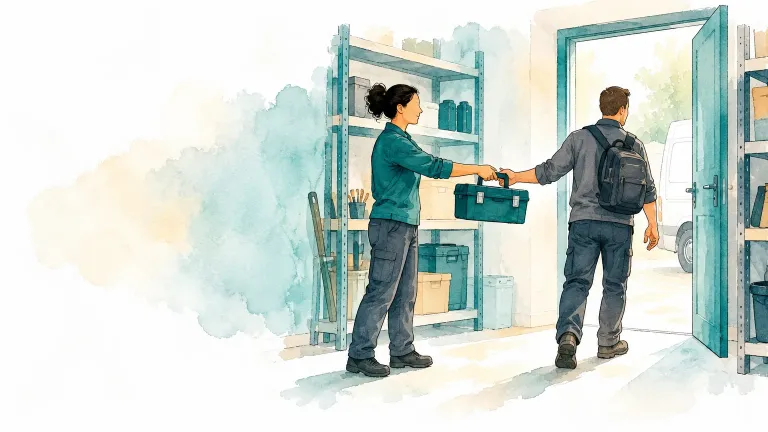
An electrician checks the van's stock against the next day's jobs, so a missing part does not mean a second trip.
- Retail
A shop assistant puts older stock at the front so it sells before its date, instead of throwing it away later.
- Office
An office manager books the only large meeting room for the audit week before the auditors arrive.
In each case the person thinks ahead about what the work needs, chooses where scarce items go, and prevents waste.
Why it matters in different kinds of jobs
When equipment, space or materials run out, work stops or people improvise. Studies of hospital nurses found that missing supplies and equipment were a frequent everyday problem, and that nurses usually worked around them. That kept care going but meant the cause was rarely fixed (Tucker & Edmondson, 2003; Tucker, 2004). The same pattern shows up in workshops, kitchens, labs, offices and warehouses. Waste and misuse cost money, and misused equipment can be a safety risk. We found little research on this skill as a hiring topic, so this page describes the behaviour rather than citing hiring studies.
Why interviews often miss it
Few interview questions ask about equipment and supplies at all; they are seen as background. When they come up, candidates describe being organised in general terms. The moment that matters, choosing who gets the last item or raising a shortage before it stops the work, rarely appears in a story about something else.
How a work situation can show it
A realistic work situation can include a scarce item or space with two competing needs, or a supply that is about to run out. You then see whether the candidate gives it to the more important use and says why, arranges to get more or finds an alternative, and deals with waste or misuse when they see it, rather than leaving the shortage for someone else.
What to ask in an interview
"Tell me about a time there was not enough of something the work needed: equipment, space or materials. Who got it, and how did you decide?"
Follow-up: "What did you do for the people who did not get it?"
"Describe a shortage you saw coming. What did you do before it happened?"
"Tell me about a time you noticed waste or misuse of equipment at work. What did you do about it?"
Listen for a reasoned choice about scarce items, action before the shortage, and attention to waste.
To see it with a situation from your own job, read how it works and pricing.
What hire.center shows, and its limits
In hire.center, a candidate handles one realistic work situation built from the job. The scorecard shows the candidate's own words for each skill the recruiter chose, or says there was not enough evidence. One situation shows one situation, not the whole job, and it does not test technical knowledge. A person makes the hiring decision. Our quality checks so far use AI-played candidates in six example jobs, most of them with customers or colleagues at the centre of the work. We are extending them to more kinds of jobs.
Sources
- Tucker & Edmondson (2003). Why hospitals don't learn from failures: Organizational and psychological dynamics that inhibit system change. California Management Review, 45(2), 55–72
- Tucker (2004). The impact of operational failures on hospital nurses and their patients. Journal of Operations Management, 22(2), 151–169